Featured

Writing Journey: How I Fell Into A Life Of Words

My Writing Journey

I fell into writing. I wasn’t someone who had always written or who had dreamt of being a writer, and to be honest I didn’t know writing was even a job possibility. So, with this weeks post I hope I can show you that anyone, from any background can achieve personal success with words. And that there is no ‘right’ way to get into writing; we all have our own story to follow.

It was Sunday. The sky was grey and with an autumn chill to the air it was the perfect conditions for a writing session. I took a stroll into town, through the drizzle and wind, and aimed for shelter in my favourite coffee shop, Café Nero. Once arriving, I bee-lined to my usual table and began tapping away at my laptop.
To give you some context, It’s September 2019 and I’m editing the first draft of my first ever book. A journey I have been embarking on for over two and half years. However, this particular editing session was special, as I stumbled upon a treasure hidden within my work: an old word count. Simply, it stated 3250 words. This made me pause.
For an essay, a letter or even a blog 3000+ words are a substantial amount, but for a novel it might not even cover the first chapter. So, when I wrote this I would have been in the very early stages of writing. This was such a wonderful gem to find, as it made me reflect on how far I had come. Over two years later, my draft is now 100,000 words deep. And so, I sat back, took a sip of my coffee and thought, I can’t believe I did this.
For someone who has studied the sciences and works in a botanical field, one would never imagine I could or would write a fictional book: even me. And yet I have. It may be messy and need a lot of editing, but I can say with conviction that I have written a book. And so, I say like many of my other blog posts, don’t judge yourself or put yourself in a box. Whether you’re a vet, an artist, a barista or a swimmer if you want to write it’s okay to do so. If you get joy from it, it’s okay to do so. If people judge you and don’t value the point of words, so what? It’s okay to do so. Don’t limit yourself on what you think is right or what others value as important. if you enjoy it just smile and crack on; you’ll feel happier in the long run.

When I think back to my university days studying environmental science I was always riding on an average grade, not bad, but not top of the range either. This changed during my 4th year in 2015 when I started to embrace my creative flare, I figured I had nothing to lose so I might as well include a different spin on my work. So what if I included that diagram that took me hours, sometimes days to draw on word? If I was having fun creating my reports then hopefully my professors would enjoy reading them. And it paid off, I shot to the top of the pack and it made me change my mind on creativity. It really is unbelievably important and yet it’s still undervalued; particularly in education. It doesn’t have to be separate from our normal daily lives. Creativity is a gift that we all have, and all should embrace. It can brighten our days and that is nothing to be ashamed of. Despite saying this, I never thought my inner artist was good enough and so I had ignored her until this point.
Now forward to the summer of 2017. I had moved to New Zealand and was working in a retail job (albeit with amazing people), which I really didn’t want to be doing. Nature was my calling, but alas I struggled to get substantial volunteering or work in this field. But you do what you’ve got to do to live, there’s also no shame in that. And yet, despite my turmoil of not getting that ‘dream’ job, interestingly this was the summer where my creative writing took flight.
But, how did this happen?
Well, my manager at the time took me to an author’s talk. It was hosted at the library literally across the road from the shop we worked at and it changed my life.
The author was Nalini Singh, an exceptional romance author who I would highly recommend.  Seeing her happiness, experiencing her kindness and feeling Nalini’s amazing energy as she talked about writing her books made me want to be as excited about my work as she was. At the time (if you didn’t guess) I wasn’t happy in my job and so I figured I could give writing a go and see if it gave me equally as much joy. That night I went home and started mind mapping book ideas. And I tell you, I’ve never looked back. It has now been two and a half years and I’m still plugging away. I’m pretty sure I have re-written my book four times over, but this has just been part of my journey in finding my voice. Passages I wrote at the beginning, needed a complete overhaul and it has shown me how far and how much I have grown as a writer. It’s amazing.
To this day, I have a nervous, jittery energy that doesn’t calm unless I get some sort of writing done. Writing basically calms my soul and gives me a peace that only a few other things in life can accomplish. Don’t get me wrong there have been challenges along the way. In 2018, when I moved back to the UK I had a 3 month period when I wrote nothing and it felt awful. Even just this past week, I suffered such a crashing wave of doubt I struggled to get anything done. I hated everything I was writing, I thought I sucked and there was a resistance I needed to push through. But, the main thing is I pushed back. I care too much to give up. Despite the fact that I often don’t feel worthy, I often don’t feel enough. I often don’t feel gifted. When this happens I have to remind myself that if the universe is making me fearful and anxious, then it means I need to take this on, it means the thing I’m doing matters. As they say, if you’re nervous then it shows you care. And I really care about my writing.
So… What do you care about?
What makes you nervous and jittery?

Remember, we’re all extraordinary.
So, believe in yourself, as only you can achieve your dreams!

Thank you for reading and please feel free to leave a comment with your thoughts.
Happy writing!
Featured

I Want To Write A Book: 5 Rules on How to Begin


Week 5: Advice on How to Start Your Writing Journey

‘I’d love to write a book’
This is a phrase most of us will have heard. Either from our own thoughts, from a friend or in a crowded train. However, a sad truth is that many people who start with this phrase also end with it. The thought of writing a book is too big, too monumentous … impossible. Many simply don’t try or give up at the first hurdle. I won’t lie a book is hard work. But it is possible.
But where do you begin?
It’s simple really, you start by writing. Pen to paper, dictaphone in hand or fingers to a keyboard. Words are the stitches that make up the tapestry of a book and we all know words. With the language we use every day, we can all build a sentence, a paragraph, a chapter. If we can do that, then why not a full novel? You can do it, writing just takes time, patience and an unmovable resolve to finish.
However, even though it’s simple – you write a book by writing – your mind isn’t. starting can feel daunting and (if you’re like me) the pressure can force you to procrastinate like a dog chasing its tail. Because of this, I wanted to give you some tips that I hope will help start your writing journey; and believe me once you start you won’t be able to get the buzz out of your blood.
The first hurdle is believing you can do it. I believe in you and you should to.
So…

Rule #1 Don’t sabotage yourself from the start. Believe in your own magic.

Another important thing to remember is that the whole point of writing is to have fun and to enjoy the experience. If you are doing it just for money, this is the wrong path for you to take. It’s easy to understand if you look at paid writers and people that write just as a hobby; they are the same. Both would and do write for free. Don’t force it. Just look at what you do for free in your own time, this’ll reveal exactly what you enjoy doing.  
This shouldn’t be confused with challenges. Writing can be very hard and frustrating at times, but overall the journey should be loved. If it feels like a chore, I would personally move on to another creative outlet. It’s okay there are many other activities you can let your imagination feast on.
So…

Rule #2 Write because you love the journey

Don’t know what to say? Have no ideas?
I know staring at a blank screen can be intimidating, discouraging. Your mind goes blank, panic floods your system and you feel like a failure before you even start.
So before you block yourself at this hurdle remember, you can start your creative process anywhere, doing anything.
What am I talking about?
Well…first you need to figure out what you like. What inspires you? What feels magical or gets your heart pumping? These are all important questions you need answered, as your writing should focus on a subject you feel passionate about. Once you know your trigger topics, it will help to open up your mind to all the wonderous ideas available to you. And frankly your excitement or boredom will shine through your words; I know what type of author I’d rather be.
Once the gate in your mind is open and aware that you are looking for ideas, one will come to you. You just need to listen for the whisper. To do this, I suggest you engage in something that excites your imagination.

For example:
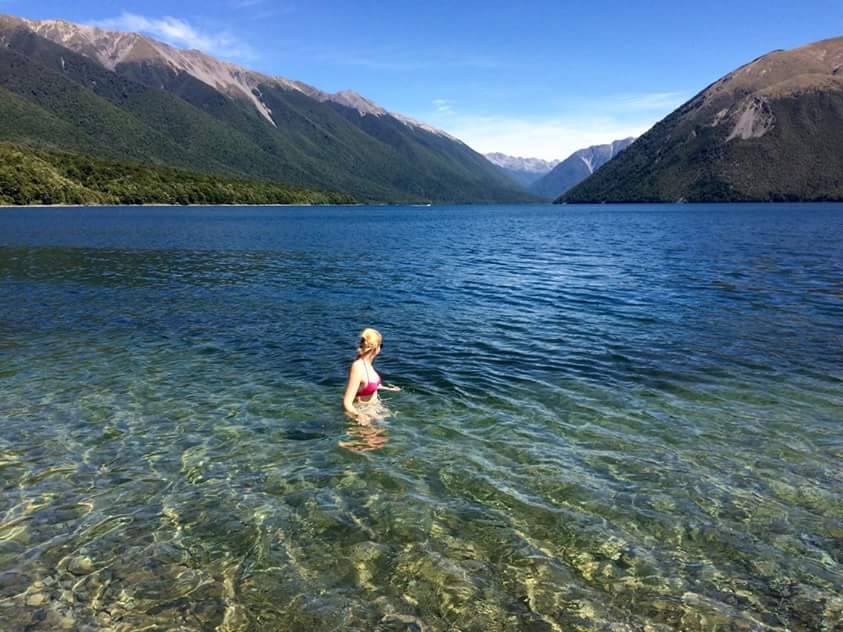
> If you love nature go for a walk in a forest or swim in a lake.
> Love history? visit a museum or country estate; a certain exhibition may plant a seed in your mind.
> Or have a peruse in an antique store if you love to time travel in your mind, you may be surprised what you can find.


And remember keep something to write on close by; you’ll be surprised when the idea hits. However, don’t panic if one doesn’t come to you straight away. It’s okay, give it time. They will happen when you aren’t even looking for them. Just keep doing activities you enjoy and trust that your mind will keep listening in the background.
I personally get my ideas at the most random times. I don’t go looking for them, they find me as I’m running, going for a walk, or even cooking.
So…

Rule #3 immerse yourself in subjects you love. I suggest something that gets you moving as it will help your imagination flow

Once you have a spark of an idea, you need to decide on your writing approach. Do you want to begin by jumping into the story, discovering it along the way? Do you want to plan a solid outline? or a mix of the two?
There are a few ways to do this, you can either experiment with all three. Or examine yourself. Are you organised? Or do you thrive on spontaneity?
Look at how you have completed work in the past. At school did you get papers done weeks before the deadline or the night before? What I’m preluding to is, if you will write better as a pantser or a planner. There are successful authors from both categories, so there is no prestige or ‘right way’ of doing things. All you need to figure out is which is the right way for you.
I personally do a mixture of the two. I use a basic chapter outline and then go with the flow filling in the gaps. This is how I used to plan and execute work for university; therefore, a natural method for me to follow.
So…

Rule #4 Figure out if you’re a pantser, a planner or a mix of the two. Once you follow your own flow, you will write the best way for you.

At this point you have a spark, an idea and potentially an outline (there are many books that can help such as ‘plot and structure’ by James Scott Bell).
Now let’s begin your writing sessions. Find a space that is comfortable and will let you get lost in your imagination uninterrupted. Pick up your pen, computer or Dictaphone and start your story. Don’t worry how messy or uncoordinated your 1st draft is, or even where in the story you begin (the first scene I wrote turned out to be chapter 11). That is the point of your 1st draft. Get the ideas down and move on. You can edit later down the line.
So…

Rule #5 Set achievable goals for your writing sessions. This can be 300 words or a time limit of 10 minutes. My personal goal is simple: write every day. It doesn’t matter how much or what project; I just need to keep my head and heart in the game of writing to keep my soul at peace.  

I hope you have enjoyed this week’s post and that it has inspired you to start that book, blog or article you have always wanted to write. Remember you can achieve anything, just believe in yourself and good things will happen.

Happy writing!

If You Feel Beat, Just Repeat: The four ifs’

Week 4

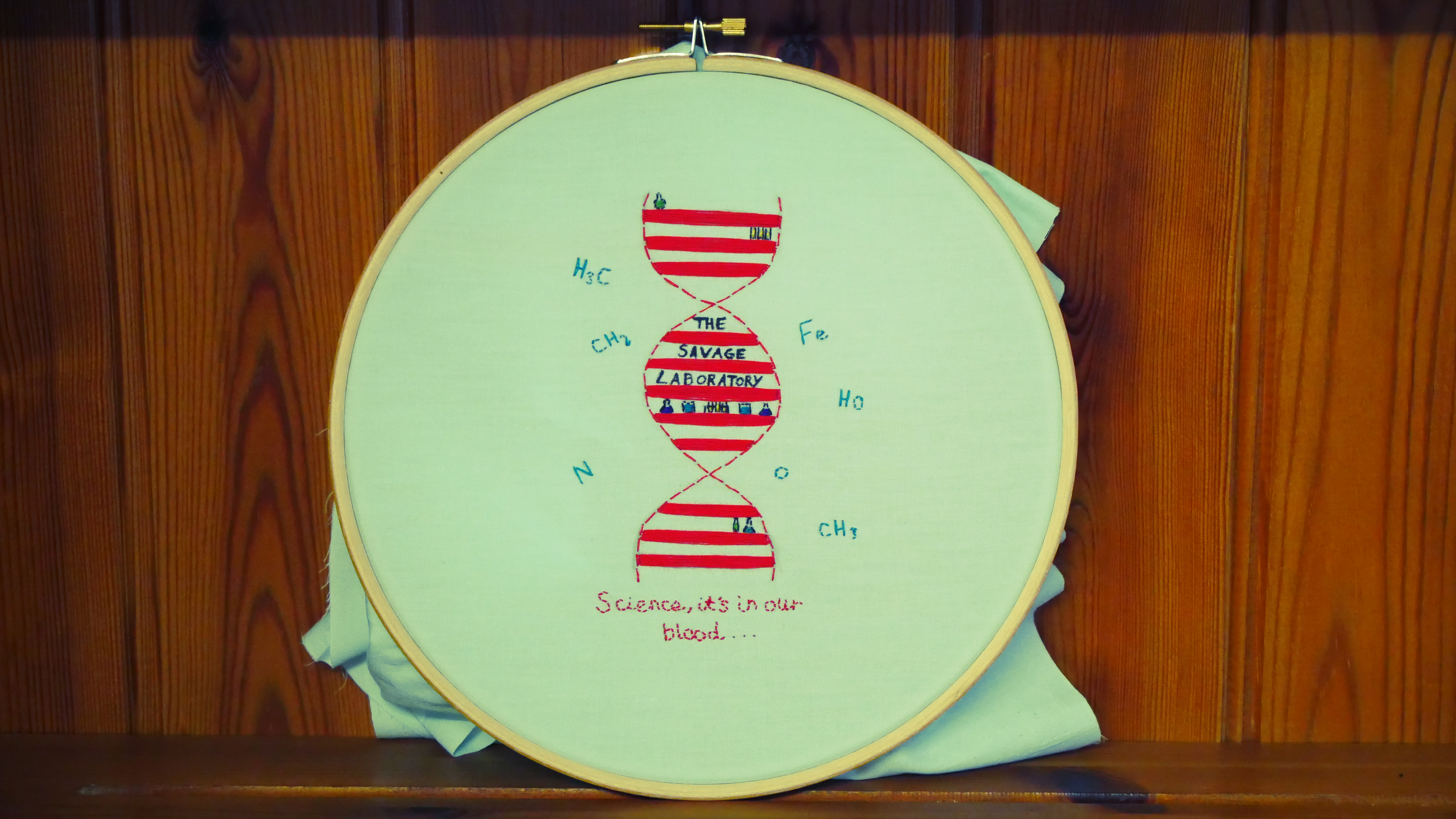
This week has been a busy one, with my time being swallowed up with jobs, stress and the autumn blues. And as the nights grew darker, I didn’t want to switch my needle for something different; as I knew I would get some much-needed calm when sewing. So this week my message is:

If you love it, keep doing it.

There doesn’t need to be just one project. Try it, if you love it. Do it again. That is the point of this creative journey finding what you love and having beautiful bursts of joy in your week. Creating art shouldn’t be a chore. If it is move on.
However, saying that, it is okay to have days where the challenge is difficult. As I once heard, there are 2 types of fun: leisure fun like playing in the sea and challenging fun. With the latter, as long as you love the overall journey it is okay to have times of turmoil.
But…

If you hate every second of a project, move on.

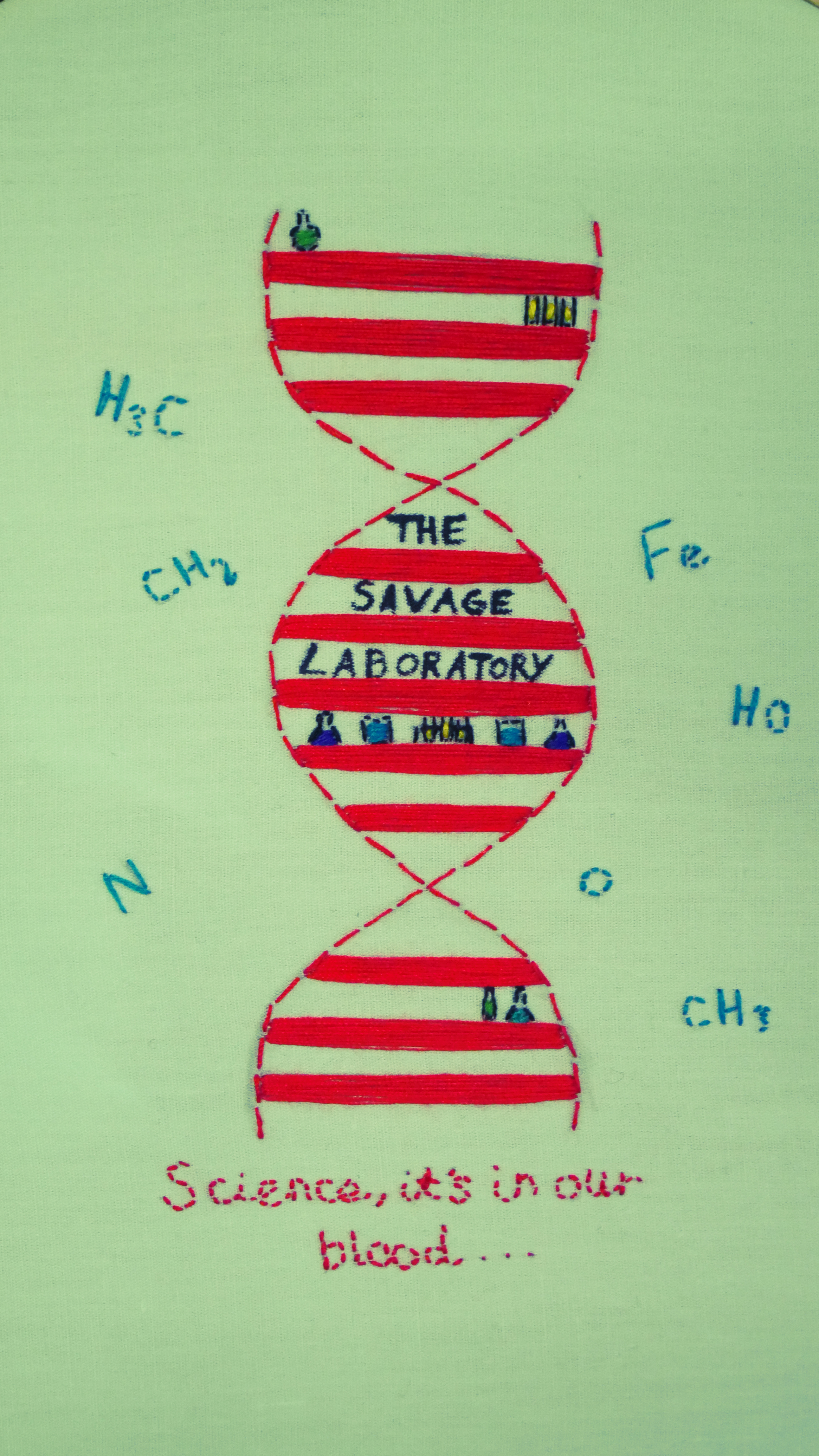
If you haven’t guessed, this week I created another small embroidery. Much in the same vein as last weeks post. This was inspired by one of my closest friends, who asked me if I would take orders (non-profit orders I’d like to add). I hadn’t thought about taking requests and so I jumped at the challenge.
As my friend is a science teacher, I thought I would focus on the theme of science and the ideas started popping.

If you keep your mind and heart open, the ideas will keep flowing.

Combining my love of science and art was fun (you’ll see what I mean in the image below). And even though I was creating for someone else, (showing them love), this meant that I also enjoyed the process, as I loved the design. I always hope my passion can be seen through my work and thus spreads joy. This is why it’s obvious when someone doesn’t love what they do. Simply put, their heart isn’t in it.

If you create that thing, that makes your heart sing, you’ll feel the joy that it brings

Thank you for reading this week’s short post. I hope I have inspired you to pick up that one activity that always makes you smile. You don’t have to over complicate it, just pick it up and do it. Even if that’s watching your favourite film.
Love life and fill it with joy.


Below is my embroidery from this week:

Share your Flare: Sewing

Week 3

This week I decided to explore my creativity through sewing. I have enjoyed needle work since I was at school, but I’ve never been a pro or had a burning passion to do it every day. And so, I have dabbled in it every now and then leaving unfinished projects around my house. But, it’s easy to forget how easy sewing can be…in its basic form all you need is a needle, thread and material. You don’t have to be the next best designer or an artistic genius, just crack on and enjoy it. However, with the craziness of life this small hobby can be pushed aside. So I am very glad I picked up my sewing needle again this week.
After an amazing weekend with one of my closest friends, a long drive and being slightly hung over I was exhausted and didn’t fancy doing much Saturday afternoon… And when we feel a little delicate, where do we find ourselves? In front of the good-old tele. Yet, when we do finally veg out in the evening, most of us look at our phones, tablets and laptops as we watch re-runs, films and the news. So, if our attention is already diverted by Instagram, facebook & online shopping why not re-channel this habit into a creative venture? Sewing fits this perfectly!
Below are a few points I hope will help you get the buzz for a sewing project and at the end I will reveal my work and who I created it for.
Enjoy!
 
1. Keep it Simple
You don’t have to over think it, you can choose how small or big your project can be, it can be done from the sofa and it’s something you can pause if a really good scene in game of thrones pops up. I would say, if you do fancy some sewing I wouldn’t watch anything new that you really want to watch as your attention is honed in on the precision of your needle.
Some people in my life can do amazing needle work; my mum, my nan and friends in New Zealand and the UK. But, I’m not a pro, have never strived to be so and I find it very frustrating when I can’t get that complicated stitch to work in my favour. So if you are like me keep it simple. Simplicity won’t diminish your satisfaction and sense of accomplishment. All I used were three stitches: back, running and straight stitch.

2. Sharing is Caring
Surprisingly even though I know that I find sewing calming and therapeutic, I still don’t make time for it. So my main point this week is actually about creating for others. As the cliché goes, sharing is caring. Creating a gift for someone else, or even fixing someone’s favourite dress can give you the push to sit down and do the work. I guarantee once you start, you’ll be glad you did. There is also a wonderful sense of joy, showing people you love them through a piece of work that you have put your own time towards. And (this can be crucial) if your home is already full, the finished product doesn’t have to clutter up your house!

3. Follow Your Interests
Even though my main point this week is to create for others; as this can help your own creativity, I still think you should focus on a theme you enjoy. For me I love nature. This means I can generally wing a plant design with only a basic plan. For example if I want to sew a leaf, I can picture which direction the veins should go; helping with the stitches I end up using. This will help you get on with it; overthinking projects can be a hindrance and can stop you from doing the very thing you set out to complete.
This doesn’t mean you have to stick to one type of design / theme. I personally wish I could draw, sew and imitate the human form, but anatomy doesn’t interest me. And so any project based around that would be a stressful challenge and it could damage my personal satisfaction of the finished product; as it wouldn’t reflect what I was picturing in my mind.
Some of you may want a hard challenge. If so, go for it! But for me I like to sew for relaxation. So choose something you like as the stitches will flow much easier.

4. Perfection isn’t Necessary
It’s good to aim high, to have challenging goals and to strive to be the best you. But these things don’t mean perfection. Far from it. Your quirks, your failures and your annoying traits are part of you and equally important. In truth ‘perfection’ is a fallacy.
What I think is a perfect painting might be rubbish to you. The colours that give me joy, might give you a headache and my perfect dress may fit you in the wrong places. So with a spin on a known cliché I think, perfection is in the eye of the beholder. If you believe this, can perfection really be reached…? I think not. Particularly as we keep improving in our lives, our goals get bigger and bigger, making our view of perfection always a step away, even if you take a leap forward. Don’t box yourself into this cage that doesn’t really exist. It isn’t necessary or healthy to give yourself impossible standards.
Also don’t judge yourself. Your spice is what makes you, you and is what makes your work unique and interesting. So what if that stitch isn’t the same length or is slightly mis- placed. Feel proud that you created art from a simple reel of thread. Feel proud of being you. Feel proud of your creative spice. The chance of being born is 1 in 400 trillion… This makes us all miracles, so own it! 

Key Points:

  • Keep it simple
  • Start small if you have lots of unfinished projects (like me)
  • Create what you like; it’ll give you a better eye for detail
  • Create for family & friends; spread your creative joy
  • Remember it doesn’t have to be perfect, the point is to have fun

Thank you for reading, I hope I have inspired you.

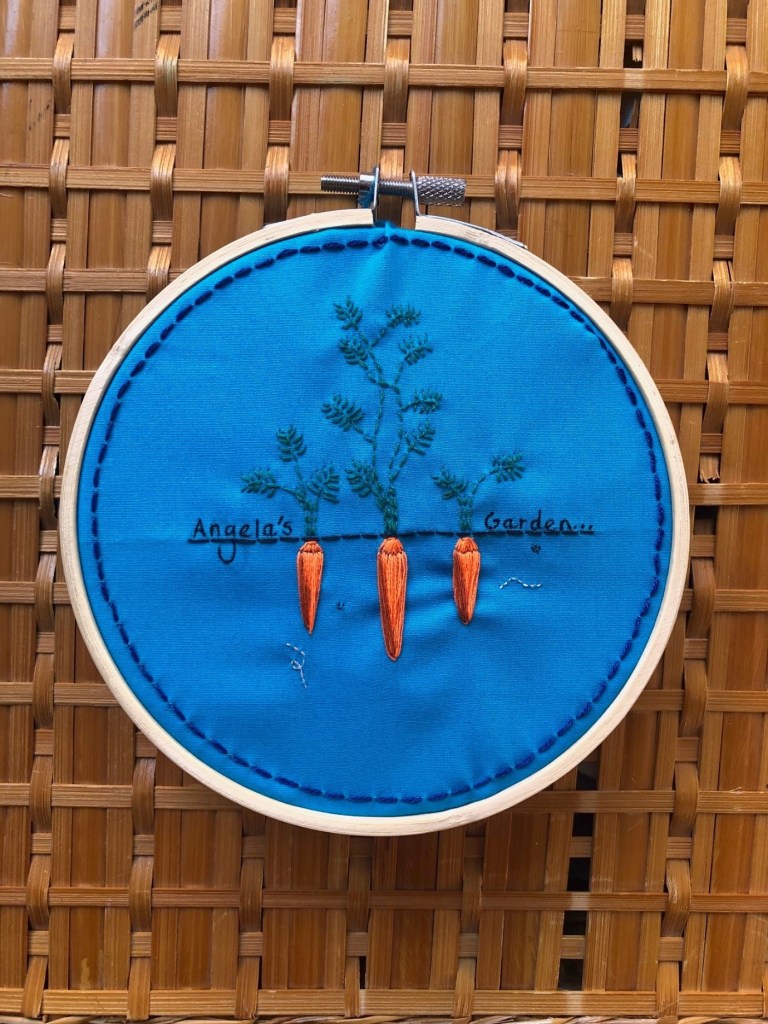
If you’re interested see my sewing creation from this week below.
This is for you mum!
(Sorry dad I haven’t mastered a motorbike just yet)

Re-living Jurassic Park: A book review and comparison with the 1993 film


This week I decided to do a book review of Jurassic park by Michael Crichton. I know reading may not seem an obvious creative venture, but I think it is. When you read an amazing book, you are creating a personal movie within your head. Depending on story and genre you can be transported into a different time, a different world or even a differing perspective. Yet the wonderful thing about reading is that even if we read the same book, we all create differing images. That is why reading is such an amazing journey, it’s personal and yet still can be a shared experience with other people.

So… Jurassic park. Most people will have seen the films. Which are still some of my favourites, despite the first one being released the year I was born! However, regardless of my love for the films, I haven’t always been an avid dinosaur lover. In fact, it’s only been the last few years that I’ve been able to walk through the dinosaur section at the natural history museum without terror. Yes, a little childish, but ironically, I think I watched Jurassic Park a little young and it scared me for that long. Hilarious now that I think about it!
Anyway, I have been trying to read different genres for my own book and about 2 weeks ago I randomly found Michael Crichton’s book in Waterstones. I thought, ‘why not’ and wow I was in for a happy surprise. It was like watching the films for the first time, but better and with more information. There are much more dinosaurs, attacks, science and tension. Overall, I would highly recommend it.

Spoilers below, stop if you don’t want to know some outcomes from the book.


The book starts with a family finding a secluded beach in Costa Rica, where unknown to them, small dinosaurs (compy’s) have taken up home. Their daughter gets attacked and the ball starts rolling from there. This is very similar to the start of the second film: The Lost World. At the same time we follow a doctor in Costa Rica who is getting suspicious about the number of animal attacks occuring, offshore and inland.
After this the science jumps in with a small dino sample (compy) being sent to labs for identification. No-one knows what it is and so finally the x-ray gets faxed to Palaeontologist, Dr Alan Grant and palaeobotanist graduate student Ellie Sattler. This links directly to a call from Hammond who lures them into visiting the park. If you’ve seen the film this is very similar, but within the book it is more in-depth and it’s interesting to be within Grant and Sattler’s excited heads.

Once they all arrive at the park, everything goes smoothly for the first 1/3 of the book. However, despite the relative peace, there is a constant undertone of tension. The waves of warning that something is coming.
The first thing that really caught my attention was the variation in how the park was perceived. With the book being able to explore a lot more characters in depth, you get to understand the perspectives of the workers, the scientists, the owners, and the visitors. Hammond (owner) and Wu (geneticist) view the park and its animals as commodities. Wu even admits to upgrading the animals like software, each new batch with a different number code (e.g. version 4.0, 4.1, 4.2). This is surprisingly uncomfortable as they are fictional animals. Alongside this, the human arrogance is even more extreme in the book. It’s not that the workers are arrogant jerks, it’s the fact that they are 100% confident the park won’t fail. Particularly John Arnold within the control room. And when you don’t comprehend risks, you don’t put any decent contingency plan’s in place. For example, they assume all the dino’s are female and thus can’t breed, as such they only count the animals they should have, not even thinking there could be more, running around invisibly. This is all revealed wonderfully in the book – I will let you discover this yourself.  
This is also why the corrupt computer expert, Dennis Nedry is such a brilliant character. You know early on that he is planning something, but you don’t know exactly how or when he will execute it.  The not knowing, combined with reading the confidence of the other workers, makes each page tense. Speaking of Nedry his death was much more gruesome and descriptive in the book. Whether this is better, that can be up to you, but I certainly thought it added more tension.  

When the death blow does happen, and the park starts to go haywire this is where the real fun happens. The T-Rex attack on the tour cars is the first major action of the safety breakdown. But, what’s interesting is that the book follows an adult and a juvenile T-Rex, both of whom have a part in the bloodshed.  
Then we follow Grant, Tim and Lex’s journey through the park, where they try to get back to the visitor centre, completely unaware that madness is ensuing at the so-called safe haven that they want to reach. There is no power. No protection. No way to keep the raptors in.
As they trek through the park, they encounter many different animals, herbivorous and carnivorous alike, all of whom they have to sneak past. However, their constant enemy is the adult T-Rex. Who tracks them across the park and pops up at random times (he can even swim!). This makes for a fun journey. Especially as the kids really act like kids; mainly the 7-year-old Lex who plays-up when dangerous dino’s are close.

Grant is great, just like the films. He’s interesting, cautious and intelligent all rolled in one, however the big difference is that he likes the kids from the start.
Ellie Sattler and Ian Malcolm in the book are equally great, however Malcolm is more obnoxious and rants about a lot more science. Which I love!
Whilst Hammond, who meets his end at some point in the book, isn’t as lovable as you’d expect. He is blinded by his vision and blames everyone else for any failure, he even begins to resent the kiddies. Not the grandfather figure you see from the films.

The story ebbs and flows wonderfully and when it all seems like the park is safe once more, hell breaks loose again. The multiple raptor attacks are particularly fun and tense to read. You really get the sense that they are prime hunters and terrifying; I even had to make sure my bedroom door was closed before I continued with those pages. I wont spoil it all, but Grant has a particularly great encounter with a raptor hunting party in the hatchery; I don’t know how he could be so calm.
The end of the book is satisfying and yet still leaves you with a level of wonder and questions that I hope will lead into the second book: The lost world.
Overall, this is a fantastic book. It is by no means simple, but because of Crichton’s genius, you flow over the page making it an easy read.

Thank you for reading, I hope this inspires you to pick up that book you’ve been meaning to read or to have a go at a story you wouldn’t usually go for like I did. You may be happily surprised.

Happy Reading!

For the Love of Food: baking to calm the mind

Cooking and baking is both physical and mental therapy.

— Mary Berry. 

Overwhelmed?
Not enough time?

These are some of the things that plague my mind and body each day (no-one feels fresh under stress). Unfortunately, I suspect this is the case for many others. The truth is, life can easily and regularly get on top of us. This can be combated by small (or big) sparks of joy each day,  even if that means only having time to read on the loo. But for me, stress has a funny way of beating the joy from my day.
I battle with a darkness that tries to pull me down, as I watch my dreams disappear, and of course it’s all self flagellation.
So, before I got too deep, I vowed to myself over the last week that I would fight back against the currents of stress and calm myself. Instantly, baking came to mind and my first wee project for ‘creating joy’ was born.

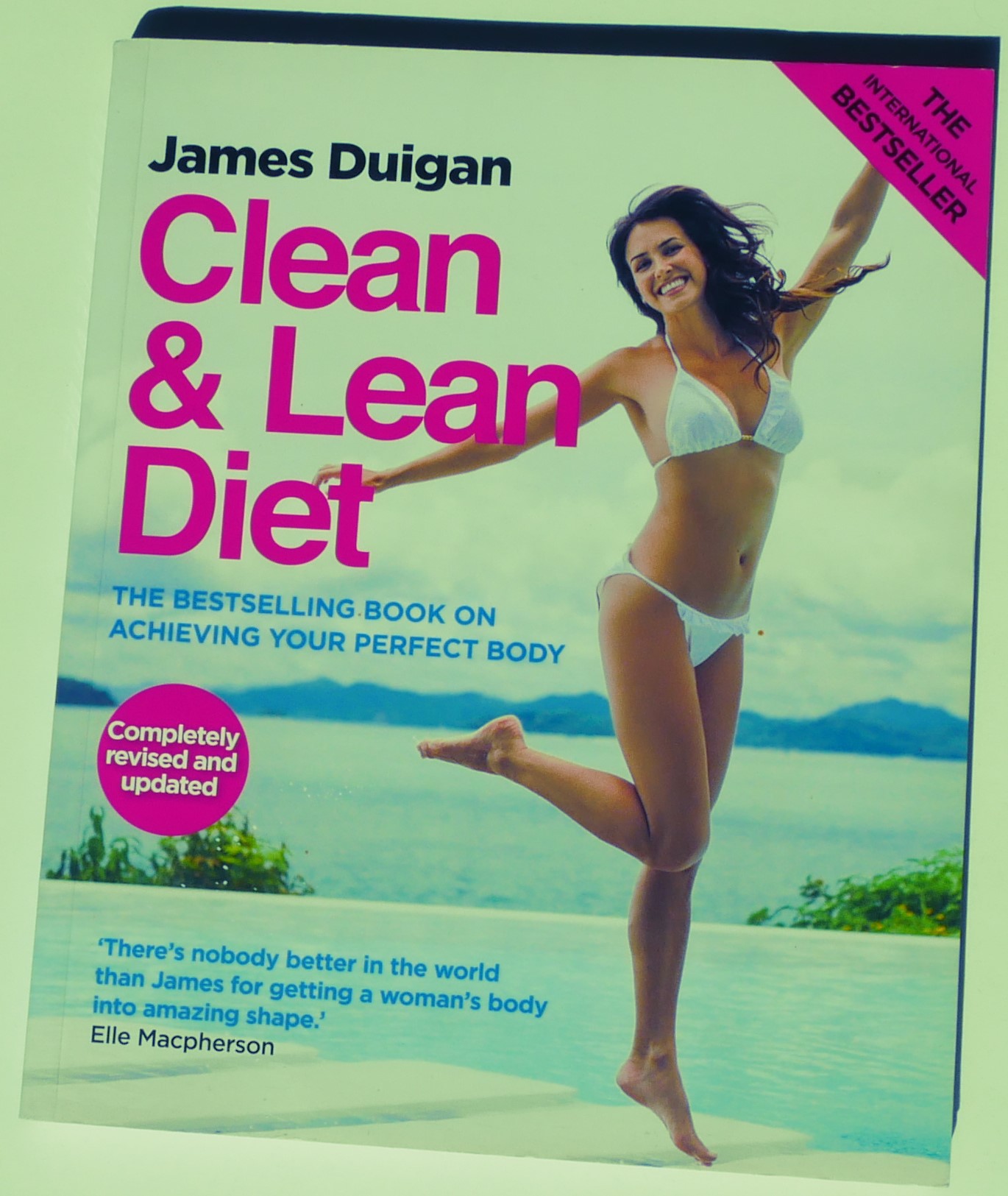
Sweet or savoury, we all have our favourites, that special thing we love to nibble. However, with our busy lives’ meals can pass by forgotten and unappreciated. Our tongue’s barely get a taste, as we rush to that meeting or drive to that next appointment. My personal relationship with food has been a weird one. I start healthy diets, and then find that I crash out weeks or sometimes days later. Good intentions thrown away as a sugar craving takes over. And so, when I saw the book ‘clean and Lean’ by James Duigan, I jumped in headfirst, wanting to break the cycle.

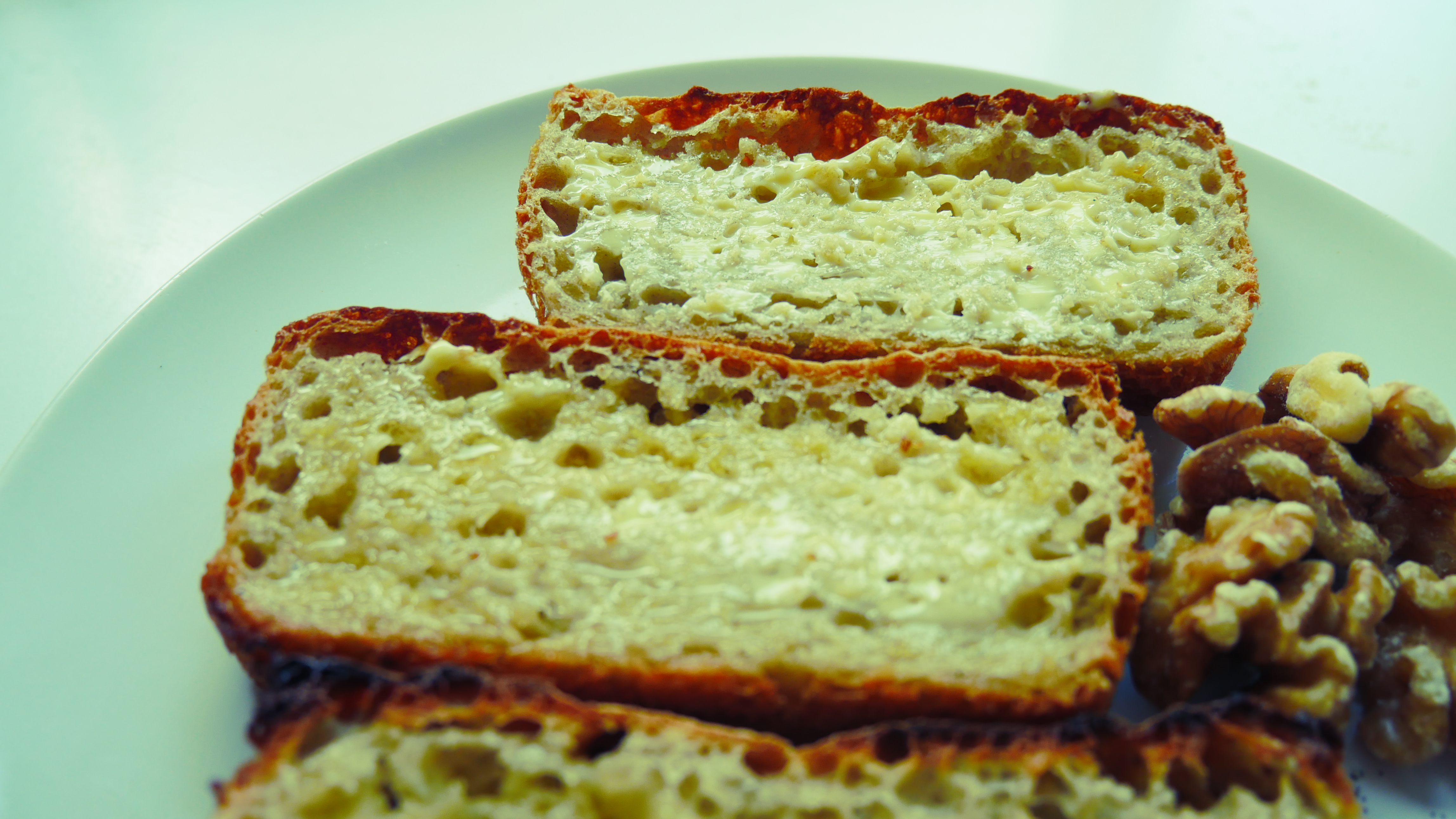
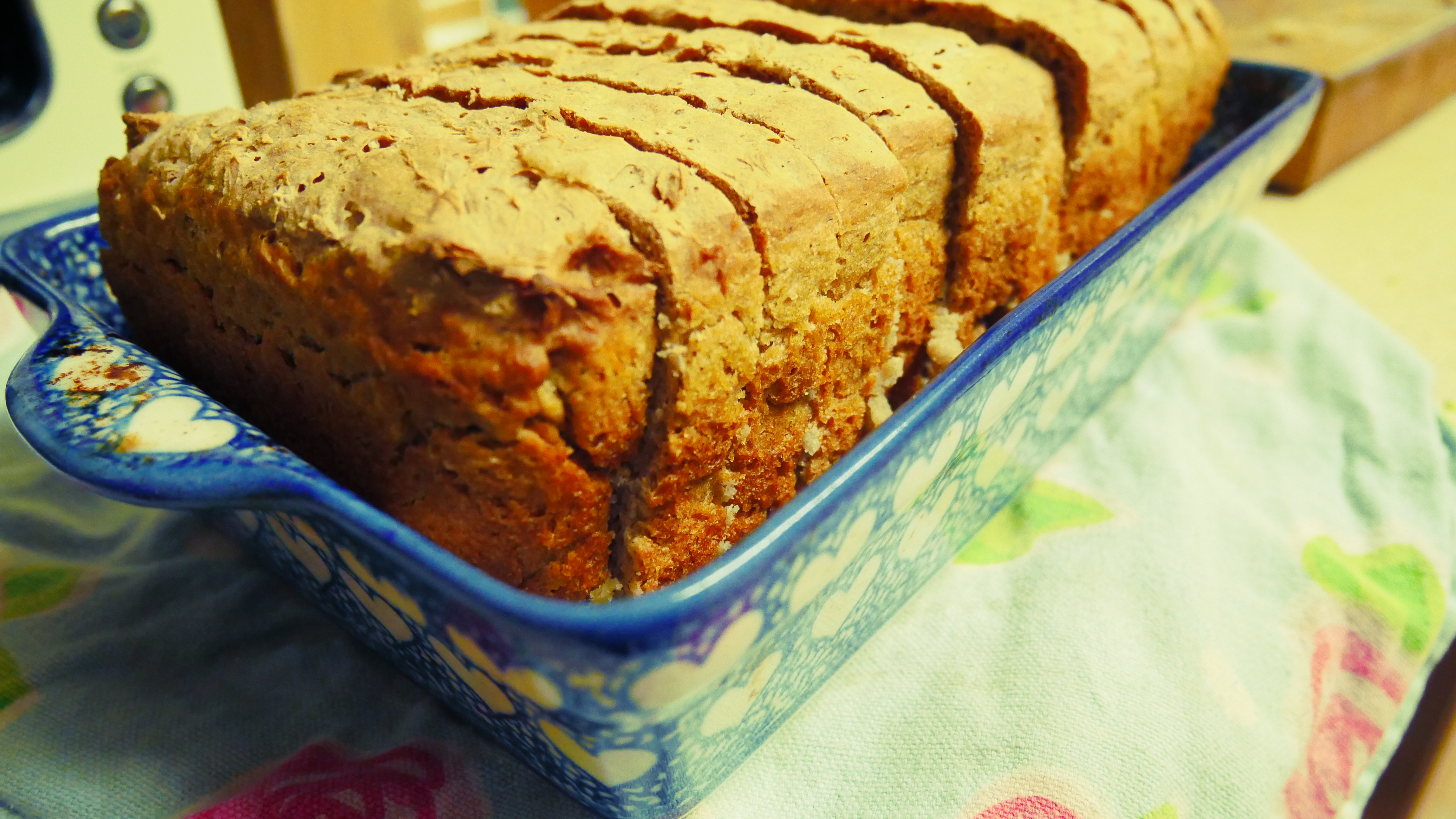
I read the book in half a day (I highly recommend it), during which time it gave me the idea for the next part of my blog project: to bake rye bread. A healthier alternative to normal wheat based bread and if I baked it myself there would be no added sugar. My mind would get a healthy creative hit, whilst my body would get a healthy food hit. A win, win!
However, I was very conscious that I didn’t overwhelm myself further. There is nothing worse than dousing the small flames of inspiration with stress, when you’re already stressed.
That’s when it hit me – Start simple.

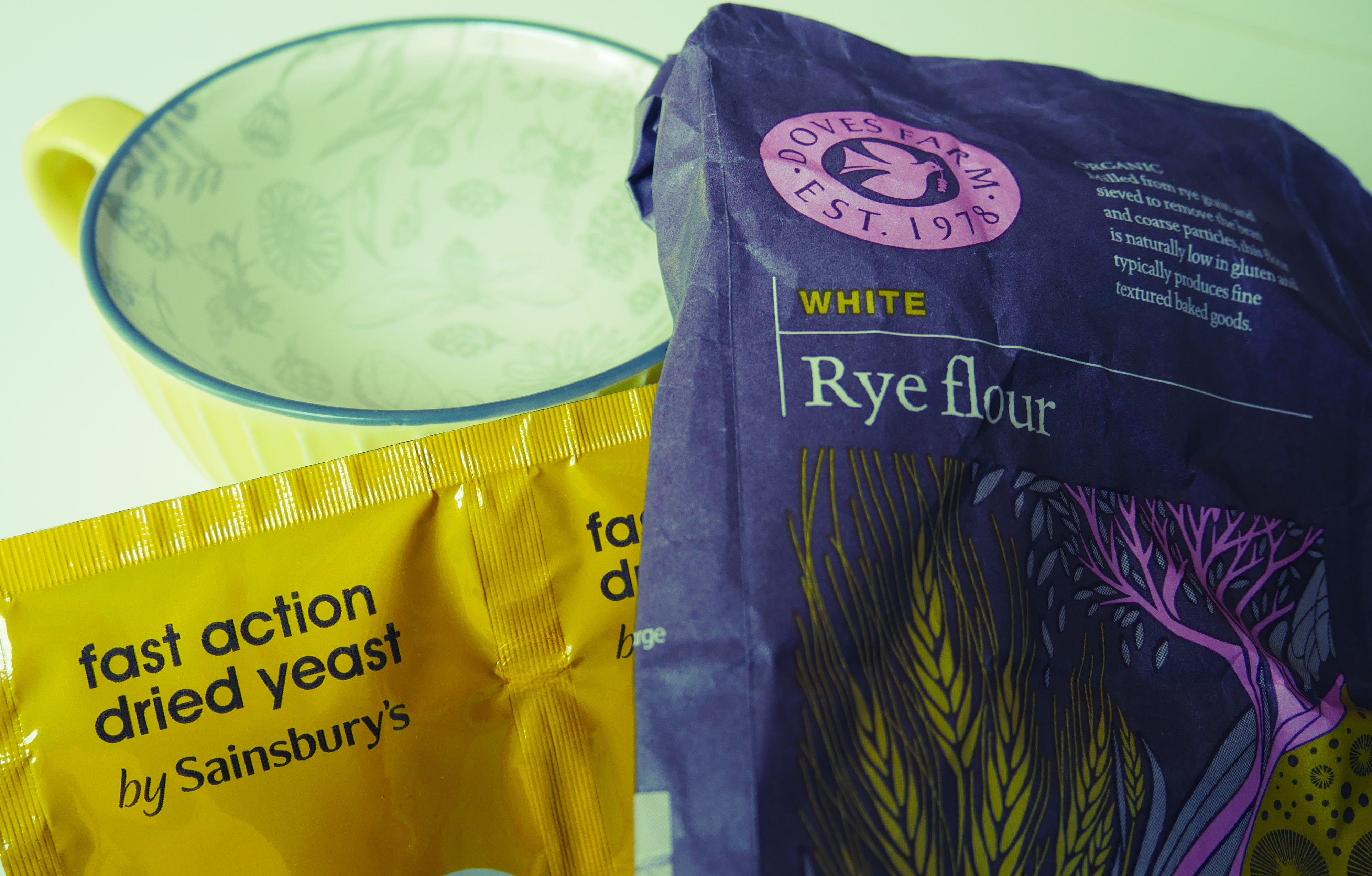
So…I dived into the black hole of the internet and surprisingly, it didn’t take long to find a simple rye recipe. All I needed was four ingredients (see below) and some time to kill in the house; being a home bird helps with the latter.
If you want to bake, but feel overwhelmed, having an easy, inexpensive recipe helps immensely. There’s no pressure and you won’t over think it.

Let’s get baking!

Ingredients
300g Organic Rye flour (light)
250g Warm Water
3g Dried Yeast
6g Salt

Utensils:
Weighing Scales
Mixing Bowl (preferably glass)
Mixing Spoon (preferably wooden)
Baking Tin: I used 20cm x 10cm x 7cm (length x width x height)
Cooling Rack (or something similar)

Timings:
Preparation: 20-30 minutes
Proving: 2 hours
Cooking: 45 minutes

Method:
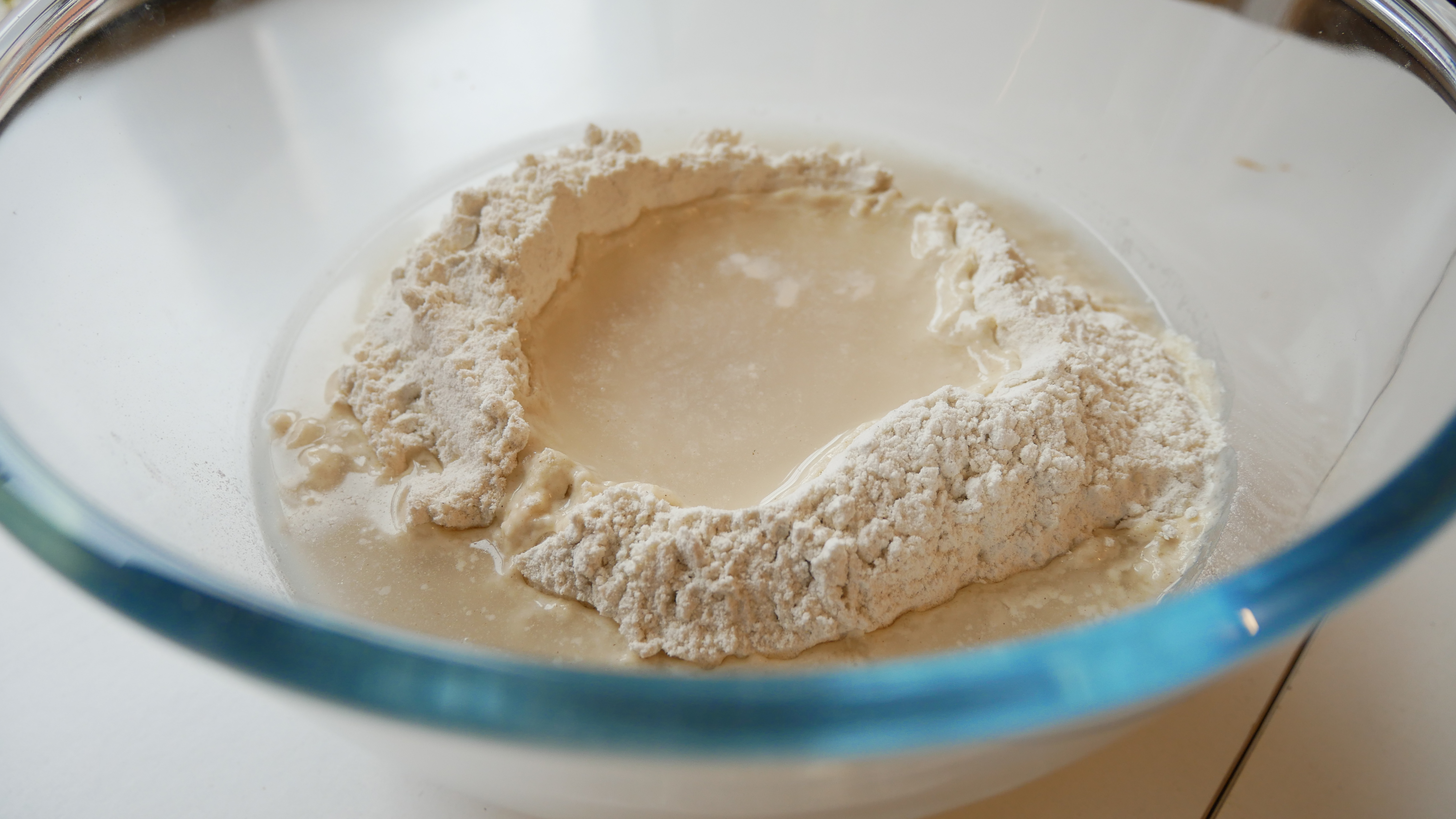
1. Place the 300g of rye flour into a glass bowl (or any bowl you have in your house). Then create a deep pit in the centre of the flour and put the 3g of dried yeast into it. Next pour half (125g) of the warm water into the pit to cover the yeast and leave it to stand for 15minutes (to activate the yeast; little bubbles will start to rise in the small lagoon).

2. As you wait, grease your baking tin. Butter is best, but you could also use grease proof baking paper.

3. Once the 15 minutes have past, add the salt and the rest of the water (and any other spices or herbs you fancy experimenting with, for example cinnamon / smoked paprika / basil etc).

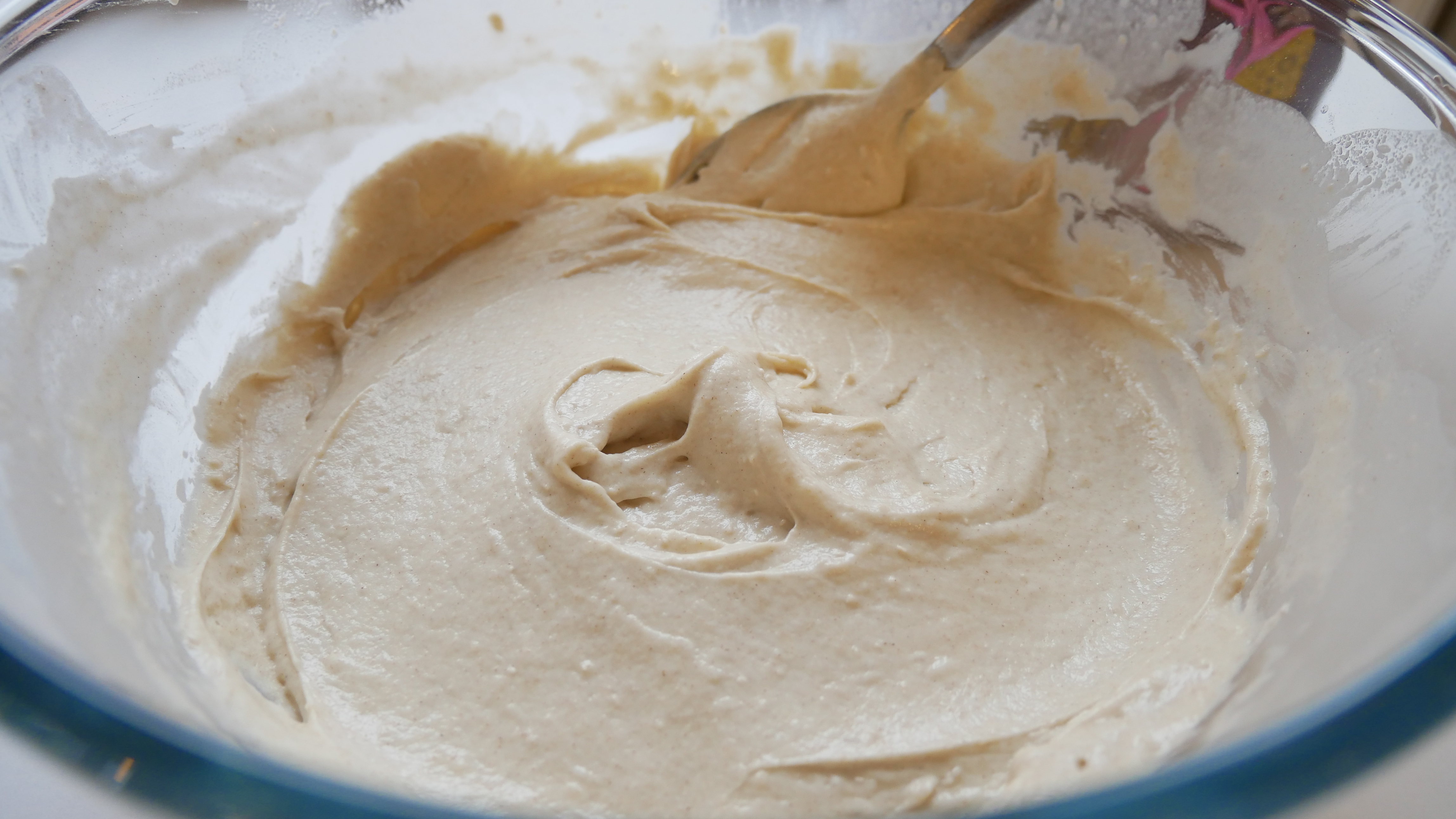
4. Next mix the ingredients together. A wooden spoon is recommended. I have limited baking utensils, so I used a metal spoon (please note using a metal spoon can be sore on your palm). The concoction should be thick and sticky, leaving the bowl sides messy. Whilst giving your arm a good workout to get the spoon all the way round. If the mix is too dry i.e. not all the flour has been picked up in the dough, feel free to add more water; but only dashes at a time as you don’t want it runny.

5. Now wet your hands, plunge them into the gooey mess and pull the dough into the baking tin (your fingers will be covered in dough afterwards). Squidge the dough around the tin, until all the space and corners are filled and make the dough surface as level as possible.

6. Next cover the baking tin in a tea towel or cling film. I found the tea towel better as the cling film pulled at the dough surface, but please note the towel can get dirtied with dough. Then place the tin on the side, preferably in a warm place or in a warm draw and leave it to prove (to give it time to rise) for 2 hours.

7. After approx. 1.5 hours turn your oven to 200 degrees Celsius, so that it’s preheated by the time your dough is ready.

8. Once the full 2hours have past, remove the cover on the baking tin and place it on the middle shelf of your oven. Cook it for 45 minutes (or until golden on the top).

9. Once the bread is cooked, take it out of the oven, leave it to cool on a cooling wrack (I just used a raised grill tray from my oven). The bread should slide out easily from the tin.

10. If you want a taller, heavier loaf just double the amounts of this recipe and cook it to approx. 1 hour (if you like your crust very crunchy; lessen the time if not).

And that’s it!

I didn’t overthink or break the bank with this recipe
(Sainsbury’s: Yeast £0.85, x8 sachets ; Organic rye flour £1.50, 1kg) , and it was unbelievably satisfying seeing and tasting the golden crusts that I had created. Nothing makes your home smell better than bread.
Well… That and cake.

Thank you for reading, I hope you feel inspired, as I did, to turn your hand to baking.
Enjoy creating!

Thank you, ‘Virtuous Bread’ for sharing this great, easy recipe on your website. (https://www.virtuousbread.com)